
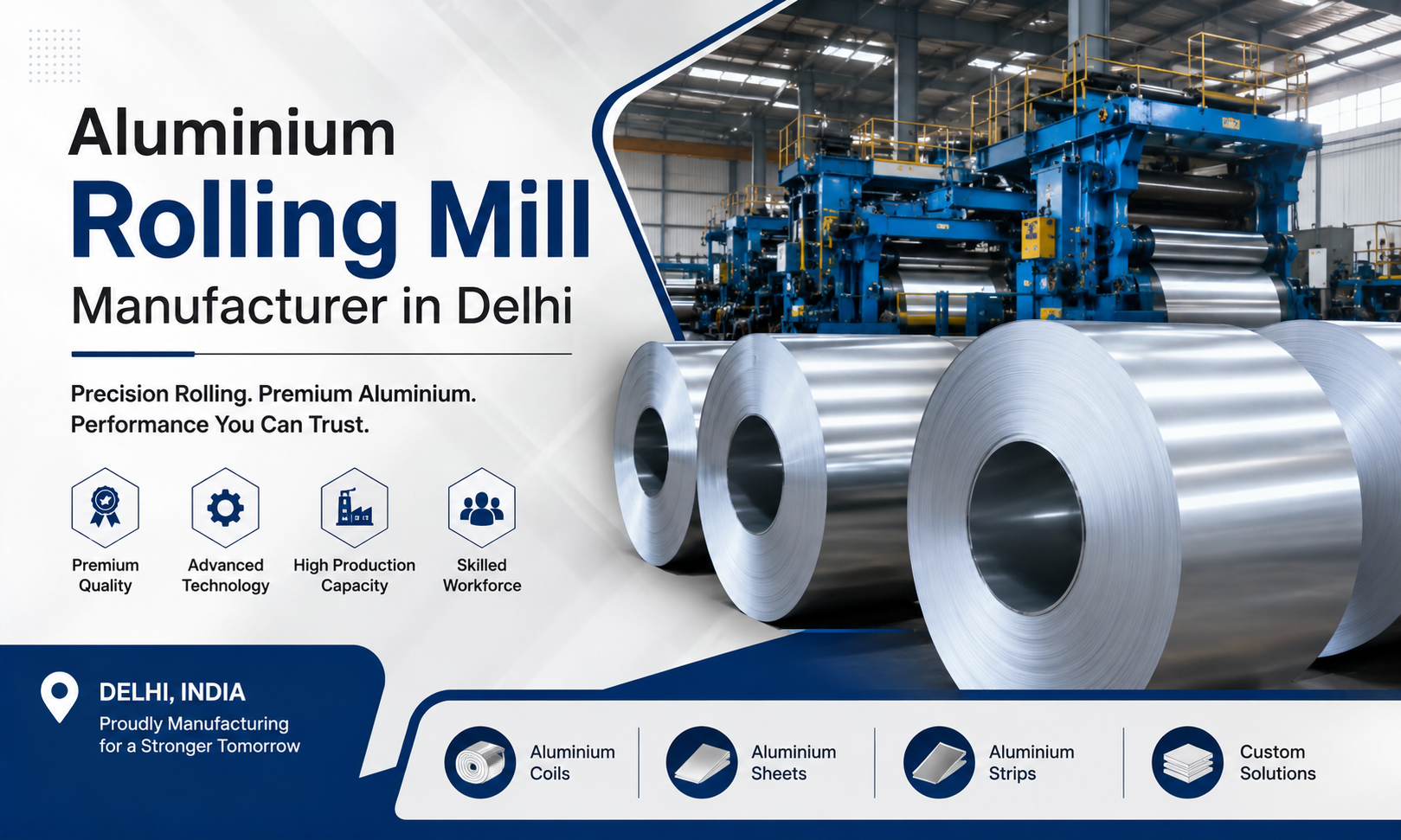
The aluminium industry is evolving rapidly, with increasing demand for high-quality sheets, strips, coils, and foils across construction, automotive, electrical, packaging, aerospace, and renewable energy sectors. As production requirements continue to grow, manufacturers are looking for reliable machinery that can improve efficiency, reduce waste, and deliver consistent product quality.
Choosing the right Aluminium Rolling Mill Manufacturer in Delhi is one of the most important decisions for any aluminium processing business. A rolling mill is not just another piece of equipment—it is the foundation of your production line. The performance of your machine directly affects productivity, operational costs, product quality, and long-term business growth.
Many businesses make the mistake of selecting a machine based only on its initial price. While a lower investment may seem attractive, poor engineering, frequent downtime, inconsistent thickness, and high maintenance costs often result in greater expenses over time. Instead of focusing only on cost, manufacturers should evaluate machine quality, engineering expertise, customization capabilities, and long-term technical support.
This guide explains the key factors every buyer should consider before investing in an Aluminium Rolling Mill Machine and how selecting the right manufacturing partner can improve operational efficiency and profitability.
Understanding Aluminium Rolling Mill Machines
An Aluminium Rolling Mill Machine is designed to reduce the thickness of aluminium by passing it through a series of precision-engineered rollers. The process produces aluminium sheets, strips, coils, and foils with accurate dimensions, smooth surface finish, and consistent mechanical properties.
These products are widely used in industries such as:
- Construction and infrastructure
- Automotive manufacturing
- Electrical and electronics
- Food and pharmaceutical packaging
- HVAC systems
- Solar energy
- Industrial equipment
- Consumer appliances
Modern aluminium processing requires machines capable of maintaining precision while operating continuously. This makes selecting the right rolling mill equipment essential for maintaining product quality and meeting customer expectations.
Why Choosing the Right Manufacturer Matters
Buying industrial machinery is a long-term investment rather than a one-time purchase. The manufacturer you choose becomes your engineering partner throughout the life of the equipment.
An experienced manufacturer helps businesses with:
- Machine selection based on production requirements
- Plant layout planning
- Engineering consultation
- Installation and commissioning
- Operator training
- Preventive maintenance
- Spare parts support
- Future plant expansion
Working with a manufacturer that understands your production goals helps minimize operational risks and ensures reliable performance throughout the machine's lifecycle.
Real-Life Scenario: A Decision That Changed Production Performance
Consider a medium-sized aluminium fabrication company planning to expand its production capacity.
To reduce investment costs, the company initially purchased a low-cost rolling mill from an inexperienced supplier. Although the machine started production quickly, several issues appeared within months. Operators struggled to maintain consistent sheet thickness, unexpected machine stoppages interrupted production schedules, and obtaining replacement parts became difficult. As customer complaints increased, production costs also rose due to higher material wastage and delayed deliveries.
After reviewing the situation, the company upgraded its production line by investing in a High Precision Aluminium Rolling Mill supplied by an experienced manufacturer that also provided installation, operator training, and technical support.
The difference was noticeable. Production became more stable, product quality improved, downtime reduced significantly, and maintenance became easier to manage. More importantly, the business regained customer confidence through consistent quality and on-time deliveries.
This example highlights an important lesson: selecting the right manufacturer often has a greater impact than simply choosing the lowest-priced machine.
Key Factors to Consider Before Buying an Aluminium Rolling Mill Machine
Production Capacity
Every manufacturing facility has different production requirements. Before purchasing a rolling mill, calculate your current production volume as well as your expected growth over the next few years.
Choosing equipment with suitable production capacity allows your business to scale without replacing machinery prematurely.
Precision and Thickness Control
Consistency is one of the most important quality parameters in aluminium processing. High-quality rolling mills provide accurate thickness control throughout production, reducing rejection rates and ensuring better product quality.
For manufacturers supplying industries with strict quality requirements, precision should never be compromised.
Machine Construction and Engineering Quality
Industrial machinery operates under demanding conditions every day. Strong structural design, precision-machined components, and reliable drive systems contribute to longer machine life and lower maintenance requirements.
A well-engineered machine also improves operational stability during continuous production.
Automation Features
Automation has become an essential part of modern manufacturing.
An Automatic Copper Rolling Mill offers several advantages, including:
- Faster production cycles
- Reduced manual intervention
- Improved product consistency
- Better process monitoring
- Lower operational errors
- Higher overall productivity
Automation also helps manufacturers maintain quality standards across large production batches.
Energy Efficiency
Electricity represents a significant portion of production costs in aluminium processing.
Energy-efficient rolling mill equipment helps reduce operating expenses while supporting sustainable manufacturing practices. Before purchasing machinery, ask manufacturers about power consumption and efficiency improvements.
Customization Options
Every manufacturing plant has unique production requirements.
A reliable manufacturer should offer customization for:
- Coil width
- Thickness range
- Rolling speed
- Production capacity
- Automation level
- Control systems
Customized solutions help businesses maximize productivity while meeting specific application requirements.
Technical Support and After-Sales Service
Technical support becomes increasingly important after machine installation.
Before finalizing your purchase, confirm whether the manufacturer provides:
- Installation assistance
- Commissioning
- Operator training
- Preventive maintenance
- Spare parts availability
- Technical consultation
Reliable after-sales support helps reduce production interruptions and improves long-term machine performance.
Common Mistakes Buyers Should Avoid
Many businesses encounter avoidable challenges because they overlook critical evaluation factors during the buying process.
Some of the most common mistakes include:
- Choosing machinery based only on price
- Ignoring long-term maintenance costs
- Purchasing equipment without considering future expansion
- Overlooking technical support availability
- Selecting standard machines without evaluating customization needs
- Comparing machines only by specifications instead of engineering quality
Avoiding these mistakes helps businesses make better investment decisions and improve overall production efficiency.
Questions Every Buyer Should Ask
Before selecting an Aluminium Rolling Mill Manufacturer in Delhi, consider asking the following questions:
- What production capacity is recommended for my application?
- Can the machine be customized according to my requirements?
- What level of automation is available?
- What technical support is included after installation?
- Are spare parts readily available?
- Is operator training provided?
- Can the machine be upgraded in the future?
The answers to these questions often reveal the manufacturer's experience and commitment to customer support.
Why Delhin Manufacturers Are Becoming a Preferred Choice
Delhi has become one of the leading destinations for industrial machinery manufacturing. Many manufacturers now supply Aluminium Rolling Mill Equipment to customers worldwide because of their engineering expertise, competitive pricing, and ability to deliver customized solutions.
Modern manufacturing facilities, skilled engineers, and continuous technological improvements have strengthened Delhi's position in the global rolling mill industry.
Benefits of Investing in High-Quality Aluminium Rolling Mill Equipment
Choosing reliable rolling mill equipment offers long-term advantages such as:
- Improved production efficiency
- Better dimensional accuracy
- Consistent surface finish
- Reduced material wastage
- Lower maintenance requirements
- Higher production capacity
- Greater operational reliability
- Improved return on investment
These benefits help manufacturers remain competitive while meeting growing market demands.
Final Thoughts
Selecting the right Vaid Engineering Industries requires careful evaluation of engineering capability, machine quality, customization options, technical expertise, and after-sales support. While purchase price is an important consideration, long-term productivity, operational efficiency, and reliability should always be given greater importance.
A well-designed Aluminium Rolling Mill Machine supports consistent production, reduces downtime, improves product quality, and contributes to sustainable business growth. By working with an experienced manufacturing partner, businesses can build efficient production facilities that meet today's industrial requirements while preparing for future expansion.
Manufacturers looking for complete rolling mill solutions often prefer companies that provide engineering consultation, customized machinery, installation support, and long-term technical assistance. Vaid Engineering Industries is among the manufacturers offering comprehensive aluminium rolling mill solutions designed to meet the evolving needs of modern metal processing industries.